




As Utah continues to grow, the conversation around housing often centers on the initial sticker price. However, a home’s true affordability isn’t just about the mortgage—it’s about the cost of living in that home for years to come. At Utah Clean Energy, we are celebrating our 25th anniversary by focusing on a critical solution for our state: low- and zero-emission (LZE) housing that prioritizes energy affordability.
Given Governor Cox’s ambitious housing goals, it is more important than ever to recognize the role energy efficiency plays in supporting a healthy, thriving Utah. Through our recent “Air and Water Innovation Grant,” we have gathered real-world data showing that emission-free homes are not just a climate solution—they are an economic powerhouse for Utah families.
Real-World Experience: The LZE Showcase Homes
Through a grant managed by the Governor’s Office of Economic Opportunity, we partnered with leading residential contractors—Garbett Homes, Sego Homes, Ivory Homes, and Habitat for Humanity of Summit and Wasatch Counties—to construct 36 “showcase” homes (2 detached single-family homes and 34 attached townhomes) and provide technical assistance to eight additional builders.
These homes prove that it is possible today to build highly efficient, zero-emission residences through improved insulation, airtight construction, high-performance windows, and all-electric equipment like heat pumps and induction cooking.
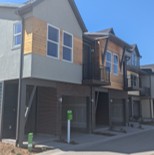 | 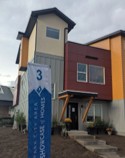 | 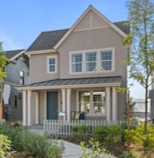 | 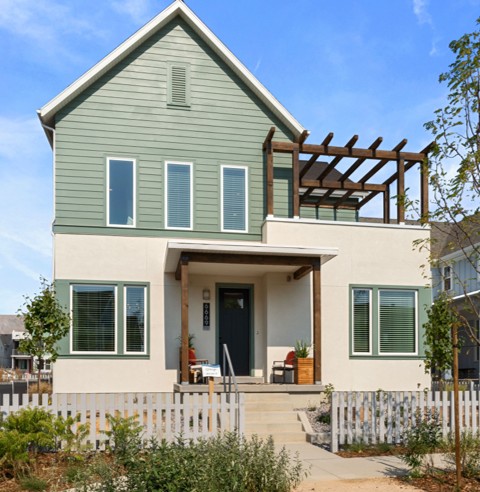 |
Defining Our Terms:
- “Zero-Emission Home” – A highly energy-efficient home that exclude on-site combustion (in other words, it is all-electric), and it is powered by on- or off-site clean energy.
- “Low-Emission Home” – A highly energy-efficient home that utilizes much lower on-site combustion (such as dual-fuel heat pumps), and is solar-ready or primed to use another form of clean energy.
The Hidden Cost of the Status Quo
Currently, the cost of energy in new Utah homes is higher than it should be. Utah’s residential energy conservation code is equivalent to the 2009 IECC and as a result, new homes in Utah built to the minimum code are 28.1% less efficient than they would in homes built to modern standards.
Beyond the pocketbook, the environmental impact is significant. A typical 2,700-square-foot Utah home built to the minimum code emits about 8.6 tons of CO2 annually. Half of these emissions come from the electricity used, while the other half comes from on-site gas combustion.
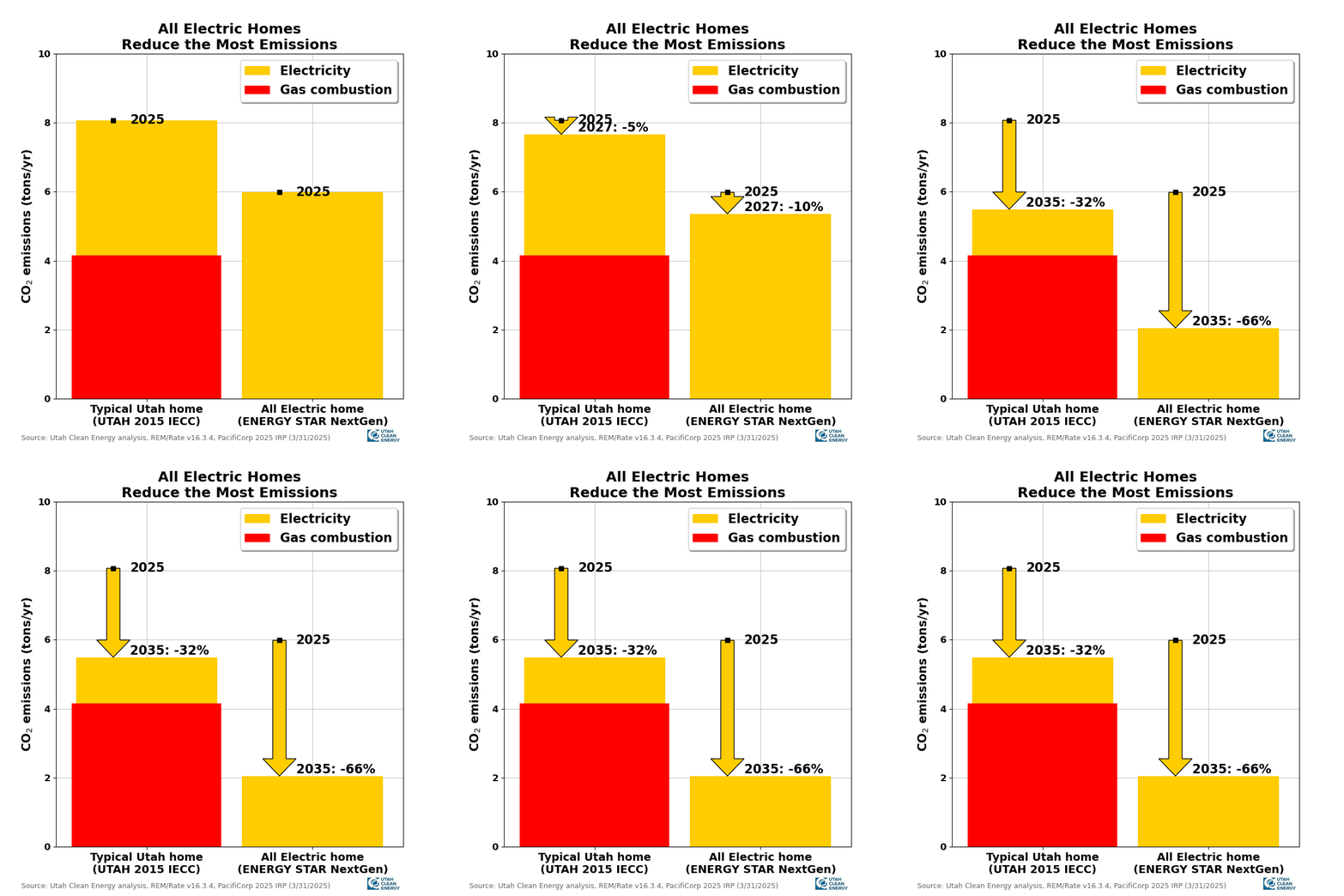
As shown in the graphic above, an all-electric home built to ENERGY STAR standards produces significantly fewer emissions—roughly 2 tons of CO2 per year. Even with Utah’s current electricity mix, the emissions footprint of an all-electric home is lower in “Year 1” and only improves as our electric grid incorporates more renewable energy.
Energy efficient and all-electric homes also eliminate NOx emissions that come from gas combustion in furnaces, water heaters, and gas stoves, thereby playing a part in protecting Utah’s local air quality.
Redefining Affordability: The Consumer Cash Flow Analysis
To truly understand housing affordability, we must move beyond “simple payback” and look at a “consumer cash flow” analysis. This methodology, developed by the Pacific Northwest National Laboratory, determines how many years it takes for cumulative energy savings to exceed the initial incremental cost of energy-saving measures. (Note: the analysis below doesn’t include the 10-unit townhome project constructed by Habitat for Humanity of Summit and Wasatch Counties.)
Our analysis of three nearly zero-emission homes built in Utah found that the added costs for energy efficiency improvements are only in the range of 1.8% to 3% of the total sales price. When you factor in monthly savings, the “years to positive savings” reveals a compelling story.
Economic Data from our “Showcase Home” Builders:
| Added Construction Costs (average) | Amount |
| Building Envelope | ($1,700) |
| HVAC | ($7,260) |
| Electric Appliances | ($3,590) |
| EV Charging | ($625) |
| Total Added Cost | ($13,175) |
| Avoided Gas Infrastructure (savings) | $2,300 |
| Utility New Home Construction Rebate | $1,469 |
| 45L Federal Tax Credit | $3,333 |
| Average Total Net Costs | ($6,375) |
| Average Cost Savings from Energy Efficient Construction | |
| Utility Cost Savings (annual) | $1,446 |
Years to Positive Savings: A Rapid Return
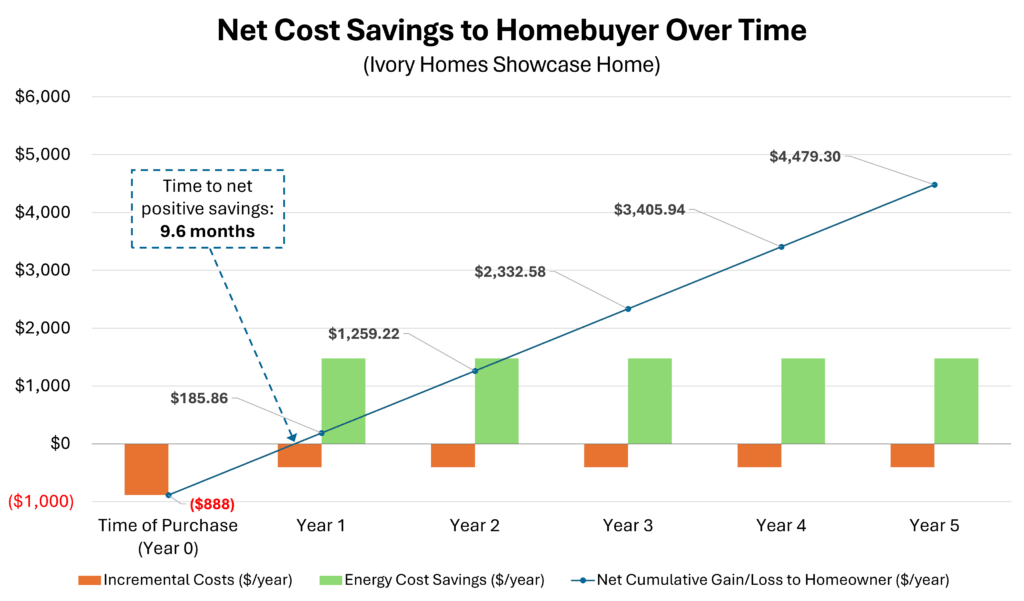
The results of the consumer cash flow analysis highlight how economical these homes are. Even with the recent expiration of the federal 45L tax credit, the time frame to reach “net positive” remains incredibly short. The results of our analysis show that the buyers of these three showcase homes are estimated to have positive cash flow in 9.6 months to 3.2 years, depending on the home, since the buyers will save more in annual energy costs than the slightly larger down payment and monthly mortgage payments.
For the home buyer of the Ivory Homes showcase home, for example, the incremental cost (after credits and rebates) translates to a slightly larger down payment ($887) and a slightly higher mortgage (approx. $36/month). However, the home is estimated to save that same consumer $123/month in reduced energy costs. By Year 5, that home buyer is nearly $4,500 ahead financially. (These figures do not include the federal 45L builder tax credit that expired in June 2026.)
Savings at Scale: Utah’s Economic Opportunity
What happens if we apply these lessons to Governor Cox’s goal of 150,000 new housing units? The impact is staggering. If all 150,000 homes were built to ENERGY STAR standards, we estimate it would generate over $4.7 billion in net cost savings over the course of 30-year mortgages.
| Estimated Economic Impact of Energy Efficient Construction for 150,000 New Homes | |
| Affordable home goal for Utah | 150,000 homes |
| Net savings per home ($/year) after year 1 | $1,073 |
| Net savings per home in year 5 | $4,729 |
| Net savings for 150k homes over 30-year mortgage term | $4,734,495,000 |
1- The net savings estimate is the estimated energy cost savings of a highly energy–efficient 2,825 square foot home built in South Jordan that meets ENERGY STAR standards as compared to the same home meeting Utah’s minimum residential energy code.
2 – The analysis assumes constant dollar values and does not account for inflation or fuel price escalation, making energy cost saving estimates conservative.
These are “net” savings, meaning the savings account for construction cost increases. This is nearly $5 billion that Utah families can use for education, healthcare, or reinvesting in the local economy.
Conclusion: Leading the Way in Housing Innovation
Utah Clean Energy is proud to have participated in the technical committee for the 2025 Utah Housing Strategic Plan. We are thrilled that tactics to support energy efficient housing construction were included in the Plan, such as offering financial incentives for homes that meet higher efficiency standards.
To support Utah home builders, Realtors, other residential housing professionals, and home buyers, we launched the Low & Zero Emission Home Toolkit for Builders, developed with direct feedback from industry professionals.
We believe that Utah can—and should—be a national leader in housing affordability. By encouraging energy-efficient construction and all-electric practices, we don’t just clear the air; we put money back into the pockets of Utahns. Affordable housing must be affordable to live in, and emission-free construction is the most viable path to making that a reality for everyone in our state.



 We would like to clarify that Utah Clean Energy is not a solar company. We are a nonprofit organization that advocates for solar and other clean energy technologies, but we do not install or sell solar in any way.